Back to blog
Why University Applications Get Delayed
Nov 9th 2026 / BY
Findadmission
Share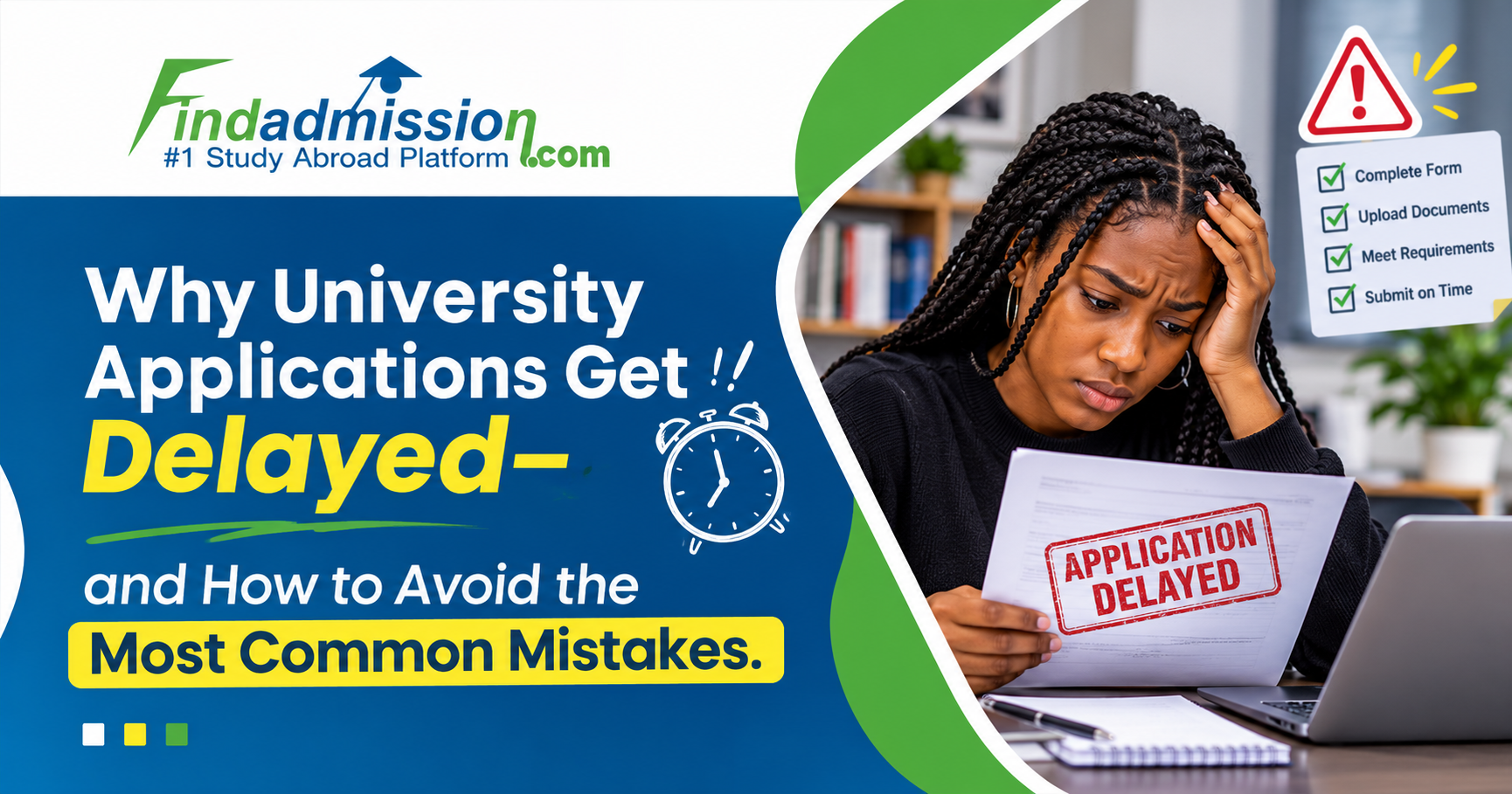
Applying to a university abroad can be exciting, but the process doesn't always go as smoothly as expected. Sometimes, students submit their applications and wait weeks or even months without hearing back. In other cases, an application gets delayed because of a small mistake that could easily have been avoided.
The truth is, getting your application ready involves more than just filling out a form and clicking submit. Your documents, information and timing all matter.
If you're planning to study abroad, here are some common reasons university applications get delayed and what you can do to avoid them.
1. Incomplete Academic Transcripts
One of the most common reasons for application delays is submitting incomplete academic records. Some students upload only their final certificates when the university also requires academic transcripts showing the courses they studied and their grades.
Others submit documents that are missing certain semesters or pages.
You should carefully check the university's document requirements before applying. Make sure your transcripts are complete, clear and readable. If you're still waiting for a document, contact your school early to find out how long it will take.
2. Inconsistent Information Across Documents
Imagine entering one date of birth on your application form and having a different date on your passport or academic documents. Even a small difference in your name, date of birth or educational history can raise questions and cause the university to request clarification.
Double-check all the information you provide. Your application form, passport, certificates and other documents should have matching details. If there's a genuine difference, explain it clearly and provide supporting documents where necessary.
3. Missing Document Translations
If your academic documents are written in a language different from the one accepted by your chosen university, you may be required to provide official translations.
Submitting documents in the wrong language without the required translation can delay the review of your application.
Always check whether your university accepts documents in their original language. If translations are required, find out whether they must be certified or completed by an approved translator. Don't leave this until the last minute.
4. Late Recommendation Letters
Some universities require recommendation letters from teachers, lecturers, employers or other relevant referees. Unfortunately, students sometimes request these letters too close to the application deadline.
Your referee may need time to prepare the letter, complete an online form or submit it directly to the university.
How to avoid it: Contact your referees early. Explain what you need, share the application deadline and give them enough time to prepare and submit their recommendations. Don't assume they will remember without a follow-up.
5. Not Meeting the Entry Requirements
Finding a university that offers your dream course is exciting, but that doesn't automatically mean you qualify for admission.
Some students apply without checking the required grades, previous qualifications, English language test scores or relevant work experience. This can lead to delays while the university requests additional information or assesses whether the student qualifies.
You should read the entry requirements before applying. Check the academic qualifications, English language requirements and any course-specific conditions. If you're unsure whether your qualifications are accepted, contact the university before submitting your application.
6. Ignoring Important University Emails
This is one mistake students don't talk about enough.
A university may send an email requesting an additional document, clarification or an update on your application. If you don't see it or respond on time, your application could remain incomplete.
Sometimes, these emails end up in the spam or junk folder, and students don't realise there's an issue until much later.
It is important to check your email regularly, including your spam and junk folders. Use an email address you can access easily and respond promptly whenever the university requests additional information.
7. Waiting Until the Deadline to Apply
Even when you've prepared all your documents, submitting your application at the last minute can create unnecessary problems. University application systems may experience heavy traffic, documents may take longer to process, and you may not have enough time to correct mistakes.
Start early. Give yourself enough time to gather documents, complete application forms, request recommendations and resolve any issues before the deadline.
Before You Submit, This is Your Application Checklist
Before sending off your next university application, take a moment to confirm that:
- - Your academic transcripts and certificates are complete.
- - Your personal information is consistent across all documents.
- - All required translations have been provided.
- - Your recommendation letters have been requested and submitted.
- - You meet the university's academic and English language requirements.
- - All required documents have been uploaded in the correct format.
- - Your email address is active, and you regularly check for updates.
- - You've submitted your application before the deadline.
A delayed university application doesn't always mean you've been rejected, but it can affect your admission timeline, especially when you're working towards a particular intake.
The best way to avoid unnecessary delays is to stay organised, understand what each university requires and give yourself enough time to prepare.
Remember, a successful application starts long before you click the submit button.
Save yourself unnecessary delays. Discover schools, review their requirements, and get started on Findadmission.